Tuesday, November 2, 2010
Media works Radio Stations
This link takes you to an image of all the radio stations Mediaworks owns...use this for your target audience details.

Wednesday, August 4, 2010
Sunday, August 1, 2010
Movie trailers
This just in from the moderator:
Movie trailers (as opposed to TV versions) can be two minutes but are often considerably longer. Two minutes is a recommended minimum but the primary focus should be on the quality and sufficiency of the product as an effective movie trailer, particularly its observance of the conventions of trailers and their narrative structure, its inclusion of expected ingredients and its effectiveness at:
- reflecting the type, mood, tone, emotional focus etc of the full feature or documentary
- highlighting key conflicts or dramatic moments
- not revealing the outcomes
- engaging the target audience interest
- providing essential information such as when it will screen, ratings, producer, director, key cast members, production companies etc
- promoting ticket sales etc.
Movie trailers (as opposed to TV versions) can be two minutes but are often considerably longer. Two minutes is a recommended minimum but the primary focus should be on the quality and sufficiency of the product as an effective movie trailer, particularly its observance of the conventions of trailers and their narrative structure, its inclusion of expected ingredients and its effectiveness at:
- reflecting the type, mood, tone, emotional focus etc of the full feature or documentary
- highlighting key conflicts or dramatic moments
- not revealing the outcomes
- engaging the target audience interest
- providing essential information such as when it will screen, ratings, producer, director, key cast members, production companies etc
- promoting ticket sales etc.
Tuesday, July 20, 2010
Scopitone
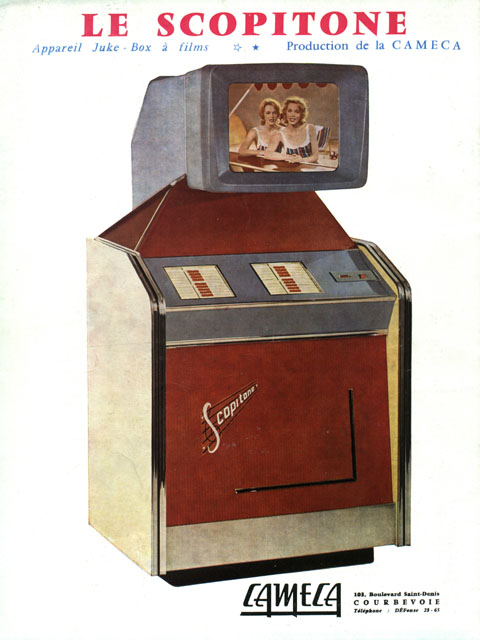
Scopitone is a type of jukebox featuring a 16 mm film component. It was a forerunner of music video. The Italian Cinebox/Colorama and Color-Sonics were competing, lesser-known technologies of the time.[
Here is an example of a scopitone clip:
Len Lye
A New Zealander who was highly experimental and influential in early film making.
Short film that illustrates the way visuals and music have often been related.
Stylus Magazine's Top 100 Music Videos
Although a little dated now being from 2006 and 2007, the above article shows a huge variety of music videos here. Perhaps some inspiration might be found.
Music Video Analysis
How to analyse a music video...
Andrew Goodwin writing in ‘Dancing in the Distraction Factory’ (Routledge 1992)
1. Music videos demonstrate genre characteristics (e.g. stage performance in metal video, dance routine for boy/girl band).
2. There is a relationship between lyrics and visuals (either illustrative, amplifying, contradicting).
3. There is a relationship between music and visuals (either illustrative, amplifying, contradicting).
4. The demands of the record label will include the need for lots of close ups of the artist and the artist may develop motifs which recur across their work (a visual style).
5. There is frequently reference to notion of looking (screens within screens, telescopes, etc) and particularly voyeuristic treatment of the female body.
6. There is often intertextual reference (to films, tv programmes, other music videos etc).
Andrew Goodwin writing in ‘Dancing in the Distraction Factory’ (Routledge 1992)
1. Music videos demonstrate genre characteristics (e.g. stage performance in metal video, dance routine for boy/girl band).
2. There is a relationship between lyrics and visuals (either illustrative, amplifying, contradicting).
3. There is a relationship between music and visuals (either illustrative, amplifying, contradicting).
4. The demands of the record label will include the need for lots of close ups of the artist and the artist may develop motifs which recur across their work (a visual style).
5. There is frequently reference to notion of looking (screens within screens, telescopes, etc) and particularly voyeuristic treatment of the female body.
6. There is often intertextual reference (to films, tv programmes, other music videos etc).
Sunday, July 18, 2010
Thursday, June 10, 2010
Intention and Audience
Now that the planning for your school assessed task is underway, you need to start thinking about the intention and audience of your media product. Who are you creating the media product for? What do you want it to achieve.
Writing about Audience
Who are you making your media product for? It may seem like a simple question but it's something you have to put a great deal of consideration into when completing your production design plan. The knowledge, expectations and experience of your audience will inform every stage of the planning and production of your media product. When you're defining the audience for your media product, avoid generalisations. It's not helpful to write that your intended audience will be 'adults' or 'teenagers'. Simply referring to a particular age group doesn't tell you much about the people who will be engaging with your media product. You need to have a clear audience in mind.
Let's imagine that you're creating a music magazine which will focus on alternative music. You might write something like this: "The audience for this magazine will be teenagers who are interested in music." No very helpful, right? This is where you can start to be more specific. Write about the attitudes, expectations and knowledge of the audience. A more detailed response might look something like this: "The audience for this magazine will be people who are interested in the alternative music scene. They are the type of people who have their radios tuned to Triple J or RRR. They have an active and passionate interest in music and are always interested in discovering new acts. It is likely that they are not particularly interested in musicians who have achieved mainstream success or regularly have songs in the Top 40. They enjoy music that is more individual, expressive and may not appeal to a mass audience. They will enjoy acts like the Yeah Yeah Yeahs, Urthboy, Little Birdy, Eskimo Joe, Bob Evans, Peaches, Bertie Blackman, Numbers Radio, Children Collide and the Kaiser Chiefs. Individuality and musical integrity are important to the audience. They are not only interested in listening to new alternative music but they enjoy reading interviews with artists and band which give them a greater insight into the creative process. When choosing a music magazine, they will have certain expectations about its content. It must be fresh, detailed, insightful and have a great deal of integrity. It will be well-written and not feature shallow puff pieces. They enjoy reading serious music journalism. The audience for this magazine will have a very detailed understanding of alternative music already and will seek out magazines that enrich their understanding of music and its associated subcultures."
Writing your Intention
What do you hope to achieve by producing your media product? Again, it is useful to be specific. When writing your intention, think carefully about what you hope to achieve. Write about the purpose, impact and outcome of your media product. A student creating the above mentioned music magazine might write something like this: "This magazine will be an engaging and intelligent read for people who are passionate about the alternative music scene. It will enrich their understanding of the music and artists by including indepth news, reviews and feature articles which not only comment on this subculture but also give an insight into the creative process. This magazine is for people who love alternative music and will encourage them to delve deeper into this world, appreciating and enjoying the music and artists even more, providing fuel for their interest and passion in this area. Ultimately, this magazine does not aspire to introduce new people to alternative music, rather build support for artists and musicians by creating further passion and interest among their existing fans."
Questions to Consider
* Who are creating this media text for?
* What are their interests? What are they passionate about?
* What knowledge will they bring to your media product? Will they be familiar with the content, style or genre of your work?
* What expectations will they have of your film, magazine or other media product? Will they compare it to similar works? If so, what?
* What is the purpose of your piece? What impact or effect do you want it to have on the audience?
* What wider outcomes do you want your media text to have?
Writing about Audience
Who are you making your media product for? It may seem like a simple question but it's something you have to put a great deal of consideration into when completing your production design plan. The knowledge, expectations and experience of your audience will inform every stage of the planning and production of your media product. When you're defining the audience for your media product, avoid generalisations. It's not helpful to write that your intended audience will be 'adults' or 'teenagers'. Simply referring to a particular age group doesn't tell you much about the people who will be engaging with your media product. You need to have a clear audience in mind.
Let's imagine that you're creating a music magazine which will focus on alternative music. You might write something like this: "The audience for this magazine will be teenagers who are interested in music." No very helpful, right? This is where you can start to be more specific. Write about the attitudes, expectations and knowledge of the audience. A more detailed response might look something like this: "The audience for this magazine will be people who are interested in the alternative music scene. They are the type of people who have their radios tuned to Triple J or RRR. They have an active and passionate interest in music and are always interested in discovering new acts. It is likely that they are not particularly interested in musicians who have achieved mainstream success or regularly have songs in the Top 40. They enjoy music that is more individual, expressive and may not appeal to a mass audience. They will enjoy acts like the Yeah Yeah Yeahs, Urthboy, Little Birdy, Eskimo Joe, Bob Evans, Peaches, Bertie Blackman, Numbers Radio, Children Collide and the Kaiser Chiefs. Individuality and musical integrity are important to the audience. They are not only interested in listening to new alternative music but they enjoy reading interviews with artists and band which give them a greater insight into the creative process. When choosing a music magazine, they will have certain expectations about its content. It must be fresh, detailed, insightful and have a great deal of integrity. It will be well-written and not feature shallow puff pieces. They enjoy reading serious music journalism. The audience for this magazine will have a very detailed understanding of alternative music already and will seek out magazines that enrich their understanding of music and its associated subcultures."
Writing your Intention
What do you hope to achieve by producing your media product? Again, it is useful to be specific. When writing your intention, think carefully about what you hope to achieve. Write about the purpose, impact and outcome of your media product. A student creating the above mentioned music magazine might write something like this: "This magazine will be an engaging and intelligent read for people who are passionate about the alternative music scene. It will enrich their understanding of the music and artists by including indepth news, reviews and feature articles which not only comment on this subculture but also give an insight into the creative process. This magazine is for people who love alternative music and will encourage them to delve deeper into this world, appreciating and enjoying the music and artists even more, providing fuel for their interest and passion in this area. Ultimately, this magazine does not aspire to introduce new people to alternative music, rather build support for artists and musicians by creating further passion and interest among their existing fans."
Questions to Consider
* Who are creating this media text for?
* What are their interests? What are they passionate about?
* What knowledge will they bring to your media product? Will they be familiar with the content, style or genre of your work?
* What expectations will they have of your film, magazine or other media product? Will they compare it to similar works? If so, what?
* What is the purpose of your piece? What impact or effect do you want it to have on the audience?
* What wider outcomes do you want your media text to have?
Tips for Your Video Production
Completing a video production for your internal assessment is one of the most challenging things you will do Level 2 Media. Here are some things you need to think about during each stage of your produciton.
Preproduction
Be realistic. You're a low budget film maker. Keep the number of actors and locations in your film to a minimum. Simple, well-executed ideas often make the best films!
Write a treatment. Writing a story outline is a great way to work out your ideas before committing yourself to a complete screenplay. A treatment is simply an outline of the story from beginning to end. It might incorporate important dialogue but it's not necessary to script every conversation at this stage. When you're writing the treatment, make sure you're creating something that's achievable and interesting. At this stage, it's very easy to reorder events and add scenes. It will be a lot harder to restructure your film later on. Don't commit yourself to writing the screenplay before you have a treatment that works!
Write a screenplay. If you're serious about screenwriting, there is also a great piece of software that you can use called Celtx, which incorporates screenwriting and story boarding features side by side. This software is available for a variety of platforms. Whichever software you end up using, make sure that your screenplay is written in Size 12 Courier. This is a clear, monospaced font. Your pages should also be numbered for quick reference on the set. Make multiple copies of your screenplay and give copies to your actors with their parts highlighted.
Storyboard. Visit the location and carefully storyboard your shoot in advance. Think about where you're going to set up the camera and where the actors are going to be. This is known as blocking. Principal photography will proceed smoothly if you have a very clear idea of what you want to do on location.
Create a shot list. A shot list is a list of all the shots in your film. As you are filming, you can mark each shot off so you don't miss anything.
Select an appropriate location. Be aware that if you want to shoot in particular public places, such as a train station, you will need to get permission to do so. Choosing an appropriate and accessible location becomes particularly important if you need to re-shoot scenes. Avoid noisy locations. If you're planning to film a scene near a busy road, there is very little you can do to reduce the noise of surrounding traffic. When shooting outdoors, even a slight breeze wreak havoc with your audio.
Use age appropriate actors. If you're planning to make a film about a senior citizen or middle-aged woman, enlist the help of older relatives. There's nothing more unconvincing than your teenage friends pretending to be in their mid-thirties. No one is going to believe that your pimply, younger brother is successful businessman, father or career gambler. If you don't have access to older actors, don't write parts for them in your film.
Ensure actors are given scripts well in advance so they have time to learn their lines. There is nothing more frustrating than actors who can't remember their dialogue. If possible, organise a time to rehearse a scene before going on location to shoot it. If the actors know their lines in advance, principal photography will run smoothly. It is always inconvenient and time consuming to arrange another shoot.
Along with the script, provide an information sheet for the actors and crew, detailing the time, date and location of shooting.
Contact the actors and crew a week before the shoot. The night before, give them another call to ensure that everyone will arrive on time.
Principal Photography
Make multiple copies of the screenplay. Bring enough for all of the actors. It's a good idea to number the pages of your screenplay for quick reference.
Use a shot list. Put your shot list in a clipboard and cross off each shot when it's completed. This will ensure that you aren't missing any coverage when you start to edit your film.
When filming, it is important to do multiple takes from multiple angles. In the film making business, this is referred to as 'coverage'. You want to get as much coverage of a scenes as you possibly can so that you're not short of footage during post-production. If you're filming a dialogue scene, shoot the entire conversation from a distance. This is often referred to as a 'master shot'. Then film each side of the conversation in close-up. During post-produciton, you can cut from your master shot to the close-ups and back again. If there's any problem with the footage, you will always have another take to cut to. Another good idea when you're filming a scene like this is to capture several cutaways. A cutaway is a shot separate from but related to the action in your scene. For example, two characters might be having a conversation over coffee. You could shoot a cutaway of a character holding their coffee mug. If there's any difficulties during the editing process, you can always cutaway to the coffee mug, then back to the action. The audience won't notice and you've saved the time and effort of a re-shoot. Likewise, when you're filming dialogue, always capture a few shots of the characters responding to each other. This way, if there is a problem with one of the shots, you can cut to the other character - perhaps nodding in agreement or listening attentively - and back again. Once again, you will have avoided a time consuming re-shoot.
Sound. It is a good idea to take a pair of headphones to the shoot so you can monitor the audio levels while you're recording. Before you start shooting and the actors arrive on the set, listen to the ambient noise through your headphones. Often there are sounds - like refrigerators or air conditioners - that your ears don't pick up but can ruin the quality of your audio. Perform a few tests with the actors. The sound of their voice should be clearly audible above any ambient noise. Poor audio quality is very difficult to fix in post-produciton. If possible, use a directional microphone or separate audio recorder to improve the quality of your audio track. When you are filming dialogue, the camera needs to be as close to the actor as possible. When you are recording with an inbuilt microphone, don't go for anything apart from a close-up when recording dialogue.
Lighting. If you're shooting indoors, make sure you turn on the lights and open windows. Ensure your characters aren't backlit or the camera is pointed directly at the light source.
Framing. Ensure your characters don't have too much headroom and there isn't anything distracting in the background. If you divide the frame into thirds, the points where these lines intersect are where you should put the important parts of a shot. Having everything centred is boring. Using the 'rule of thirds' is the best way to create a nice looking shot.
Tripod. Using a tripod is one of the best ways to make your film look professional.
Smooth camera movement. Even if you have a tripod, become used to using the camera in a very disciplined and smooth way. The best way to achieve smooth camera movement is to put one hand under the camera and one on the side to keep your shot steady. Keep your arms and the camera close to your body to reduce shake.
Post Production
Effects. Programs like iMovie and Final Cut Pro provide a range of effects and transitions. Keep it simple. There's nothing more amateurish than multiple effects or gaudy transitions. You can create a brilliant film using simple cuts, cross dissolves and fades.
Copyright. If you want to use copyrighted music in your production, be prepared to pay a considerable amount of money to obtain the rights. If you choose to exhibit or distribute your film without first obtaining the rights to music, you risk legal action. As a low budget film maker, it is a much better decision to find music from emerging, unsigned artists. MySpace is a great place to make contact with new and emerging artists who are, often, more than willing for you to use their music as long as they are credited. Although social networking sites like this are great for connecting with small bands, it's unlikely that Coldplay or U2 will return your email. Another option is to write your own music using program like Garageband or FL Studio. Be aware that your audience will often recognise loops. Do everything you can to make your music unique and different.
Shooting a Scene
Shooting a scene that involves dialogue professionally requires a great deal of skill, knowledge and planning. The following advice will explain how you can shoot and edit a scene for your films in a professional manner.
Before the Scene
Establishing Shots. At the beginning of your scene, you will need several establishing shots to show where the scene is going to occur. It is also necessary to use establishing shots between scenes to convey a change in location or the passing of time.
Master Shot. A master shot shows all of the actors in the frame at once. It is necessary to establish where your characters are. For example, the master shot might begin with one character sitting on a park bench and shows another character moving into frame to sit beside them.
Framing the Conversation
When framing a shot, it's very important to take the following into consideration:
Rule of Thirds
The Rule of Thirds is an aesthetically pleasing way to compose the frame. If you divide the frame into thirds, the points of interest should be positioned along these lines or at their intersections. Close-ups like this are a terrific way to shoot dialogue.
Look Room
When framing shots for a conversation, ensure that the characters have enough ‘look room’ which suggests to the audience that they are speaking to someone out of frame.
Headroom
Too much or too little space above the actor's head will make the shot look poorly framed. The example here and above all show appropriate uses of headroom.
Over the Shoulder Shot
If you don't want to frame a conversation using the tight close ups shown above, you can always use an over the shoulder shot, in which you can see the head and shoulders of the person the character is talking to in one side of the frame.
Two Shot
In addition to shooting every line in close up, get as much dialogue as you can in a two shot as well. This will give you greater variety when you're editing the scene.
Eyeline Match
When framing shots for a conversation, ensure that the characters are looking in the direction of the person they’re talking to. When the shots are cut together, it appears as if the characters are looking at each other.
180 Degree Rule
When filming a conversation, if you start filming the actors from one side, it's important to stay on that side. If you cross the imaginary 180 degree line, the characters will not appear to be looking in the right direction.
Shooting the Conversation
Being able to film dialogue successfully is very important when you’re making a film. Shooting dialogue out of sequence is very useful because you may not be able to have all actors on location at the same time. To do this, you need to set up the camera and shoot one half of the conversation. Once you've framed the actor up, press the record button and get them run through each of their lines. It's very important that they look in the direction of the person they're supposed to be speaking to for a few seconds before and after delivering their line. Using this approach, it's possible to stand off camera and feed lines to the actors which means they don't have to learn their lines perfectly before filming. When the actors has said all of their lines, remember to get some noddies, cut ins and cutaways. Turn the camera around and film the other half of the conversation.
Common Problems
Sloppy composition. Framing the shots carefully is crucial. Before you press record, make sure the shot is composed using the rule of thirds and the actors have adequate headroom.
Inadequate lighting. Check that your character isn't backlit
Poor sound. It is a good idea to take a pair of headphones to the shoot so you can monitor the audio levels while you're recording. Before you start shooting and the actors arrive on the set, listen to the ambient noise through your headphones. Often there are sounds - like refrigerators or air conditioners - that your ears don't pick up but can ruin the quality of your audio. Perform a few tests with the actors. The sound of their voice should be clearly audible above any ambient noise. Poor audio quality is very difficult to fix in post-produciton. Using close ups like those shown above necessarily means you have to get the camera and the microphone close to the actors.
Dirty lens. Check the lens for smudges and dust. Clean if necessary.
Distracting background. Make sure there isn't anything distracting in the background or any trees growing from the character's head.
Other Useful Techniques
Noddies. When you're shooting a conversation, it's a good idea to capture thirty seconds of the characters pretending that they're listening to the other person speak. If there are any problems with the footage of someone speaking, you can cutaway to the person who's listening, then back to the speaker.
Cut Ins. A cut in is something related to the action. When you're editing, it's good to have a cut in that you can use if there's a problem with other footage. In your scene a character might be holding a coffee mug. Film thirty seconds of this and, if you run into any trouble, you can always cut in to the coffee mug, then back to the action.
Cutaways. A cutaway is something unrelated to the action. If you're filming a scene on a busy street, might capture thirty seconds of the
Preproduction
Be realistic. You're a low budget film maker. Keep the number of actors and locations in your film to a minimum. Simple, well-executed ideas often make the best films!
Write a treatment. Writing a story outline is a great way to work out your ideas before committing yourself to a complete screenplay. A treatment is simply an outline of the story from beginning to end. It might incorporate important dialogue but it's not necessary to script every conversation at this stage. When you're writing the treatment, make sure you're creating something that's achievable and interesting. At this stage, it's very easy to reorder events and add scenes. It will be a lot harder to restructure your film later on. Don't commit yourself to writing the screenplay before you have a treatment that works!
Write a screenplay. If you're serious about screenwriting, there is also a great piece of software that you can use called Celtx, which incorporates screenwriting and story boarding features side by side. This software is available for a variety of platforms. Whichever software you end up using, make sure that your screenplay is written in Size 12 Courier. This is a clear, monospaced font. Your pages should also be numbered for quick reference on the set. Make multiple copies of your screenplay and give copies to your actors with their parts highlighted.
Storyboard. Visit the location and carefully storyboard your shoot in advance. Think about where you're going to set up the camera and where the actors are going to be. This is known as blocking. Principal photography will proceed smoothly if you have a very clear idea of what you want to do on location.
Create a shot list. A shot list is a list of all the shots in your film. As you are filming, you can mark each shot off so you don't miss anything.
Select an appropriate location. Be aware that if you want to shoot in particular public places, such as a train station, you will need to get permission to do so. Choosing an appropriate and accessible location becomes particularly important if you need to re-shoot scenes. Avoid noisy locations. If you're planning to film a scene near a busy road, there is very little you can do to reduce the noise of surrounding traffic. When shooting outdoors, even a slight breeze wreak havoc with your audio.
Use age appropriate actors. If you're planning to make a film about a senior citizen or middle-aged woman, enlist the help of older relatives. There's nothing more unconvincing than your teenage friends pretending to be in their mid-thirties. No one is going to believe that your pimply, younger brother is successful businessman, father or career gambler. If you don't have access to older actors, don't write parts for them in your film.
Ensure actors are given scripts well in advance so they have time to learn their lines. There is nothing more frustrating than actors who can't remember their dialogue. If possible, organise a time to rehearse a scene before going on location to shoot it. If the actors know their lines in advance, principal photography will run smoothly. It is always inconvenient and time consuming to arrange another shoot.
Along with the script, provide an information sheet for the actors and crew, detailing the time, date and location of shooting.
Contact the actors and crew a week before the shoot. The night before, give them another call to ensure that everyone will arrive on time.
Principal Photography
Make multiple copies of the screenplay. Bring enough for all of the actors. It's a good idea to number the pages of your screenplay for quick reference.
Use a shot list. Put your shot list in a clipboard and cross off each shot when it's completed. This will ensure that you aren't missing any coverage when you start to edit your film.
When filming, it is important to do multiple takes from multiple angles. In the film making business, this is referred to as 'coverage'. You want to get as much coverage of a scenes as you possibly can so that you're not short of footage during post-production. If you're filming a dialogue scene, shoot the entire conversation from a distance. This is often referred to as a 'master shot'. Then film each side of the conversation in close-up. During post-produciton, you can cut from your master shot to the close-ups and back again. If there's any problem with the footage, you will always have another take to cut to. Another good idea when you're filming a scene like this is to capture several cutaways. A cutaway is a shot separate from but related to the action in your scene. For example, two characters might be having a conversation over coffee. You could shoot a cutaway of a character holding their coffee mug. If there's any difficulties during the editing process, you can always cutaway to the coffee mug, then back to the action. The audience won't notice and you've saved the time and effort of a re-shoot. Likewise, when you're filming dialogue, always capture a few shots of the characters responding to each other. This way, if there is a problem with one of the shots, you can cut to the other character - perhaps nodding in agreement or listening attentively - and back again. Once again, you will have avoided a time consuming re-shoot.
Sound. It is a good idea to take a pair of headphones to the shoot so you can monitor the audio levels while you're recording. Before you start shooting and the actors arrive on the set, listen to the ambient noise through your headphones. Often there are sounds - like refrigerators or air conditioners - that your ears don't pick up but can ruin the quality of your audio. Perform a few tests with the actors. The sound of their voice should be clearly audible above any ambient noise. Poor audio quality is very difficult to fix in post-produciton. If possible, use a directional microphone or separate audio recorder to improve the quality of your audio track. When you are filming dialogue, the camera needs to be as close to the actor as possible. When you are recording with an inbuilt microphone, don't go for anything apart from a close-up when recording dialogue.
Lighting. If you're shooting indoors, make sure you turn on the lights and open windows. Ensure your characters aren't backlit or the camera is pointed directly at the light source.
Framing. Ensure your characters don't have too much headroom and there isn't anything distracting in the background. If you divide the frame into thirds, the points where these lines intersect are where you should put the important parts of a shot. Having everything centred is boring. Using the 'rule of thirds' is the best way to create a nice looking shot.
Tripod. Using a tripod is one of the best ways to make your film look professional.
Smooth camera movement. Even if you have a tripod, become used to using the camera in a very disciplined and smooth way. The best way to achieve smooth camera movement is to put one hand under the camera and one on the side to keep your shot steady. Keep your arms and the camera close to your body to reduce shake.
Post Production
Effects. Programs like iMovie and Final Cut Pro provide a range of effects and transitions. Keep it simple. There's nothing more amateurish than multiple effects or gaudy transitions. You can create a brilliant film using simple cuts, cross dissolves and fades.
Copyright. If you want to use copyrighted music in your production, be prepared to pay a considerable amount of money to obtain the rights. If you choose to exhibit or distribute your film without first obtaining the rights to music, you risk legal action. As a low budget film maker, it is a much better decision to find music from emerging, unsigned artists. MySpace is a great place to make contact with new and emerging artists who are, often, more than willing for you to use their music as long as they are credited. Although social networking sites like this are great for connecting with small bands, it's unlikely that Coldplay or U2 will return your email. Another option is to write your own music using program like Garageband or FL Studio. Be aware that your audience will often recognise loops. Do everything you can to make your music unique and different.
Shooting a Scene
Shooting a scene that involves dialogue professionally requires a great deal of skill, knowledge and planning. The following advice will explain how you can shoot and edit a scene for your films in a professional manner.
Before the Scene
Establishing Shots. At the beginning of your scene, you will need several establishing shots to show where the scene is going to occur. It is also necessary to use establishing shots between scenes to convey a change in location or the passing of time.
Master Shot. A master shot shows all of the actors in the frame at once. It is necessary to establish where your characters are. For example, the master shot might begin with one character sitting on a park bench and shows another character moving into frame to sit beside them.
Framing the Conversation
When framing a shot, it's very important to take the following into consideration:
Rule of Thirds
The Rule of Thirds is an aesthetically pleasing way to compose the frame. If you divide the frame into thirds, the points of interest should be positioned along these lines or at their intersections. Close-ups like this are a terrific way to shoot dialogue.
Look Room
When framing shots for a conversation, ensure that the characters have enough ‘look room’ which suggests to the audience that they are speaking to someone out of frame.
Headroom
Too much or too little space above the actor's head will make the shot look poorly framed. The example here and above all show appropriate uses of headroom.
Over the Shoulder Shot
If you don't want to frame a conversation using the tight close ups shown above, you can always use an over the shoulder shot, in which you can see the head and shoulders of the person the character is talking to in one side of the frame.
Two Shot
In addition to shooting every line in close up, get as much dialogue as you can in a two shot as well. This will give you greater variety when you're editing the scene.
Eyeline Match
When framing shots for a conversation, ensure that the characters are looking in the direction of the person they’re talking to. When the shots are cut together, it appears as if the characters are looking at each other.
180 Degree Rule
When filming a conversation, if you start filming the actors from one side, it's important to stay on that side. If you cross the imaginary 180 degree line, the characters will not appear to be looking in the right direction.
Shooting the Conversation
Being able to film dialogue successfully is very important when you’re making a film. Shooting dialogue out of sequence is very useful because you may not be able to have all actors on location at the same time. To do this, you need to set up the camera and shoot one half of the conversation. Once you've framed the actor up, press the record button and get them run through each of their lines. It's very important that they look in the direction of the person they're supposed to be speaking to for a few seconds before and after delivering their line. Using this approach, it's possible to stand off camera and feed lines to the actors which means they don't have to learn their lines perfectly before filming. When the actors has said all of their lines, remember to get some noddies, cut ins and cutaways. Turn the camera around and film the other half of the conversation.
Common Problems
Sloppy composition. Framing the shots carefully is crucial. Before you press record, make sure the shot is composed using the rule of thirds and the actors have adequate headroom.
Inadequate lighting. Check that your character isn't backlit
Poor sound. It is a good idea to take a pair of headphones to the shoot so you can monitor the audio levels while you're recording. Before you start shooting and the actors arrive on the set, listen to the ambient noise through your headphones. Often there are sounds - like refrigerators or air conditioners - that your ears don't pick up but can ruin the quality of your audio. Perform a few tests with the actors. The sound of their voice should be clearly audible above any ambient noise. Poor audio quality is very difficult to fix in post-produciton. Using close ups like those shown above necessarily means you have to get the camera and the microphone close to the actors.
Dirty lens. Check the lens for smudges and dust. Clean if necessary.
Distracting background. Make sure there isn't anything distracting in the background or any trees growing from the character's head.
Other Useful Techniques
Noddies. When you're shooting a conversation, it's a good idea to capture thirty seconds of the characters pretending that they're listening to the other person speak. If there are any problems with the footage of someone speaking, you can cutaway to the person who's listening, then back to the speaker.
Cut Ins. A cut in is something related to the action. When you're editing, it's good to have a cut in that you can use if there's a problem with other footage. In your scene a character might be holding a coffee mug. Film thirty seconds of this and, if you run into any trouble, you can always cut in to the coffee mug, then back to the action.
Cutaways. A cutaway is something unrelated to the action. If you're filming a scene on a busy street, might capture thirty seconds of the
Subscribe to:
Posts (Atom)